Zohran Mamdani won by being himself – and his victory has revealed the Islamophobic ugliness of others
July 1, 2025 2025-07-20 20:16Zohran Mamdani won by being himself – and his victory has revealed the Islamophobic ugliness of others

Zohran Mamdani won by being himself – and his victory has revealed the Islamophobic ugliness of others
The vicious reaction to his New York mayoral success tells us this: the establishment will not countenance mainstream voters making common cause with Muslims
Article by Nesrine Malik
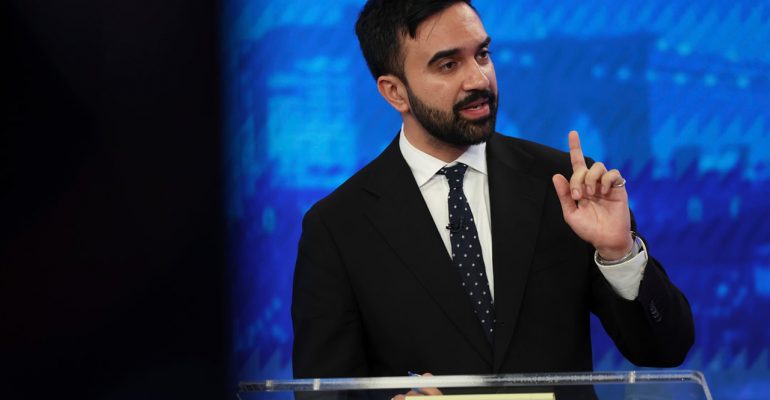
Zohran Mamdani’s victory in New York’s mayoral primary has triggered a wave of Islamophobic backlash that exposes the deep-rooted prejudice Muslims continue to face in American politics. Rather than celebrating a democratic win driven by grassroots support and progressive ideals, many responded with hysteria, painting Mamdani as a dangerous outsider bent on imposing extremist agendas—simply because he is Muslim.
Islamophobia exploded in both subtle and overt forms. Public figures, media personalities, and Republican politicians launched coordinated attacks, portraying Mamdani as a threat to national identity. He was falsely labeled a “jihadist terrorist,” a “Hamas sympathizer,” and mockingly referred to as “little Muhammad.” Even the deputy chief of staff in the Trump administration used his win to reignite fears about immigration, while others imagined apocalyptic scenarios of Islamic domination, such as veiling the Statue of Liberty in a burqa. These grotesque portrayals weren’t fringe—they were mainstreamed and widely circulated, exposing how normalized anti-Muslim sentiment remains in American discourse.
More shocking is the silence from within Mamdani’s own Democratic Party. Senior leaders like Chuck Schumer and Hakeem Jeffries failed to condemn the Islamophobic onslaught. This silence speaks volumes: that anti-Muslim hate, when politically expedient, is not only tolerated but structurally supported. It confirms that Islamophobia isn’t just individual ignorance—it’s a systemic force used to marginalize and discipline Muslims in public life.
Mamdani’s “crime” isn’t merely being a Muslim politician—it’s that he refuses to compromise his values. He has stood firmly for affordable housing, economic justice, and Palestinian human rights. While condemning antisemitism and supporting Israel’s right to exist, he has not bowed to pressure to distance himself from slogans like “globalize the intifada,” which he sees as calls for equality. For this, he is seen as beyond redemption by a system that demands Muslims continually prove their loyalty and docility.
This episode reveals the broader truth: anti-Muslim hate operates as a gatekeeping mechanism, barring dissenting voices and progressive politics from entering the mainstream. Mamdani’s victory threatens this structure—not because of who he is, but because he won despite it. His success has forced Islamophobia into the open, where its cruelty and absurdity are visible to all. And in doing so, Mamdani has become a symbol of both the challenges and the possibilities facing Muslim Americans who dare to lead.
Source: The Guardian