UK Muslims targeted in plot that barely made headlines
September 1, 2025 2025-09-14 19:25UK Muslims targeted in plot that barely made headlines
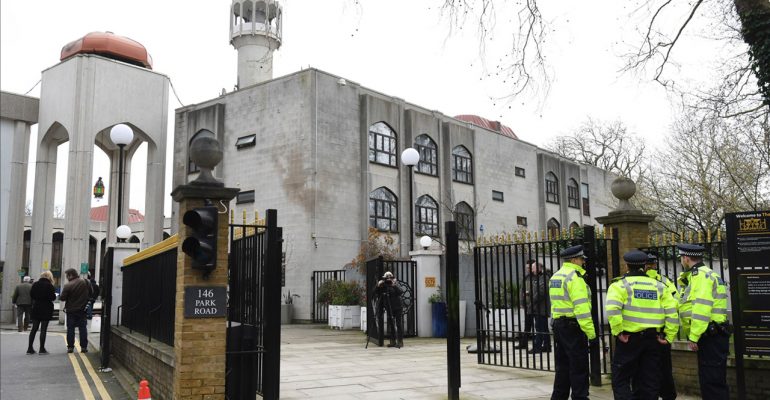

Article by Sunniya Ahmad Pirzada
The silence around Islamophobic violence underlines a chilling double standard in Britain’s media and political response, and risks normalizing deadly prejudice.
Earlier this year, in the small Scottish town of Greenock, a 17-year-old boy, drawn to Hitler’s ideology, plotted to burn down the Inverclyde Muslim Centre, lock worshippers inside, and livestream the massacre.
Influenced by far-right extremist Anders Breivik and indoctrinated on TikTok from the age of 13, he infiltrated the mosque by pretending to convert to Islam. When arrested, he was found with gas canisters, an air pistol, and fire-starting tools. He had even drafted a manifesto.
The story is chilling, yet what is equally shocking is how little coverage it received in the UK’s mainstream media. Sky News reported on it, including testimony from mosque leaders, but most other major outlets offered no substantive reporting. A plot to massacre Muslims in their house of worship did not register as a national story.
Now imagine if the perpetrator had been Muslim, and the intended victims were worshippers at a church or synagogue. The headlines would have screamed terrorism. Politicians would have been quick to make statements about extremism.
This selective reporting reinforces the idea that Muslims can only ever be threats, not targets, hence implying that their lives and safety carry less weight. It also emboldens extremists when they see a society unwilling to take Islamophobia seriously.
This is not just anecdotal. Amid this rising tide of attacks, Muslim communities are left feeling vulnerable and unprotected. Iman Atta, director of Tell MAMA reports that assaults surged by 73 percent in 2024, with 5,837 verified incidents, marking the most dangerous period for Muslims in Britain.
And yet, this surge has not translated into proportionate media coverage, policy focus, or political urgency. Far-right violence against Muslims is too often treated as the work of lone actors rather than an organized, growing threat.
For many Muslims, these mixed signals point to a deeper problem: Islamophobia is acknowledged in principle but rarely tackled in practice with the urgency it deserves.
And the government must include Islamophobia in its hate crime and counter-extremism strategies, ensuring that far-right radicalization is treated as seriously as any other extremist threat. This includes resourcing communities with real financial, legal, and security support.
Finally, the public must demand accountability. Britain cannot continue to turn away from these stories because the victims are Muslim. If the country does not reckon with the normalization of Islamophobia now, it risks waking up to a far greater tragedy that can no longer be ignored.
Read more at: TRT World