The Muslim Trap: Negotiating Being and Belonging in Turbulent Times
August 14, 2026 2026-10-07 15:05The Muslim Trap: Negotiating Being and Belonging in Turbulent Times

The Muslim Trap: Negotiating Being and Belonging in Turbulent Times
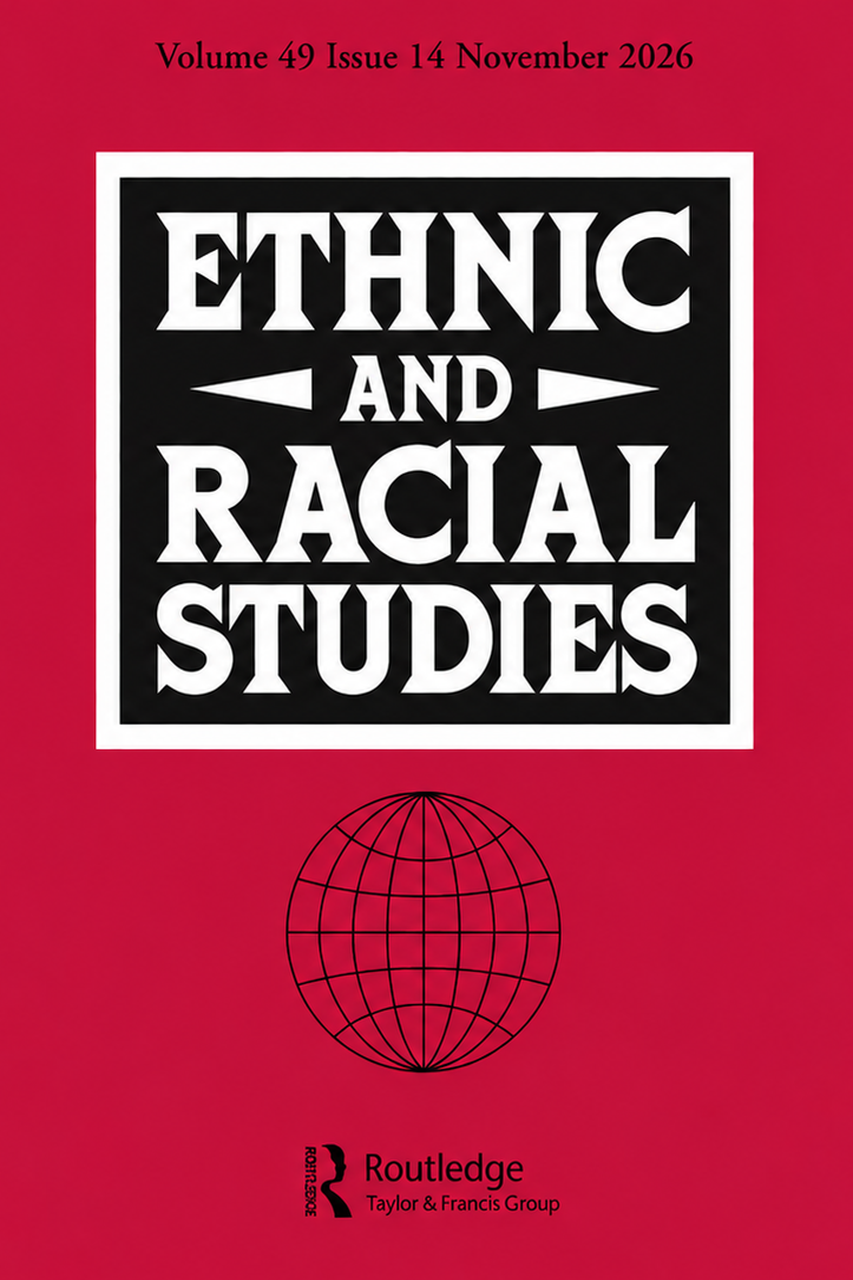
Special Issue of Ethnic and Racial Studies
Volume 49, Issue 14 — 2026
The Muslim Trap: Negotiating Being and Belonging in Turbulent Times is a 2026 special issue of Ethnic and Racial Studies, edited by Ajmal Hussain and Alexandra Poli. Bringing together ethnographic research from France, Norway, Spain and the UK, the issue examines how Muslims navigate identity, belonging and everyday life amid growing political polarization and anti-Muslim discourse.
The editors use the idea of the “Muslim trap” to describe the ways Muslims can become reduced to fixed representations of threat, difference or resistance. These representations can make Muslims appear as exceptional or problematic citizens, while overlooking the diversity of their experiences and aspirations. The issue therefore asks what becomes invisible when Muslim life is viewed primarily through the lens of conflict and polarization.
Rather than focusing only on Islamophobia, the contributors examine the ordinary experiences of Muslims in different European cities. Their research explores aspirations, relationships, civic participation and everyday negotiations of belonging. This approach highlights that Muslim lives are not defined solely by encounters with discrimination or state restrictions, but also by creativity, adaptation and the pursuit of ordinary futures.
The special issue looks at Muslim experiences across cities including Birmingham, Boulogne-Billancourt, Ceuta, Madrid, Nice, Oslo and Paris. Cities are treated not simply as settings, but as places where identities and relationships of belonging are actively formed. The contributors examine how Muslims engage with institutions, neighborhoods and civic life while navigating the boundaries between majority and minority identities.
A central argument of the collection is that Muslim agency should not be understood only as resistance to discrimination or state policies. The contributors examine how Muslims create new forms of civic participation, negotiate relationships with institutions and sometimes accept, challenge or reshape existing structures. In doing so, the issue presents Muslim belonging as an active and evolving process rather than a fixed identity.
Taken together, the special issue challenges simplified portrayals of Muslims in contemporary Europe. Its contributors argue for a broader understanding of Muslim agency that recognises both the pressures created by polarization and the diverse ways Muslims build lives, relationships and futures within European societies. The result is a more complex picture of being Muslim and belonging in turbulent times.
What happens when Muslims are continually viewed through the lens of threat, difference or resistance?
This 2026 special issue of Ethnic and Racial Studies explores Muslim identity, belonging and everyday life across cities in France, Norway, Spain and the UK, highlighting the diversity of Muslim experiences and forms of agency.
About Editors:
Alexandra Poli is a researcher at the CNRS (Centre national de la recherche scientifique) and a member of the Centre d’Étude des Mouvements Sociaux (CEMS) at EHESS in Paris. Her research focuses on Muslims in France, Islam, migration, identity, belonging and the social construction of Muslimness. She has conducted research on Muslim communities and urban change, including work on Boulogne-Billancourt.
Dr Ajmal Hussain is an Associate Professor of Sociology at the University of Warwick. His research focuses on urban and cultural sociology, particularly Muslim culture, migration, multiculturalism, racism, and belonging in contemporary Europe. He previously worked as a Research Fellow in Sociology at the University of Manchester and holds a PhD from the university.